18+. Full T&C's apply. Sports bonus: 100% match up to $500. Casino bonus: 100% match up to $500. Enter promo code NEW200 at deposit and get up to a $1000 bonus. Valid on your first three (3) deposits. Available for all deposit methods. Minimum deposit of $50.
18+. Full terms apply. The Bet Back Bonus is available for new customers on first-time deposits of $50 or more. To redeem, select the offer in the cashier while completing your first deposit. Make your pick(s) in the Sportsbook and then select ‘Opt In to Use Your Bonus’. A Bet Back Bonus pop-up will display, select ‘Claim’ and then enter the risk amount to place your bet. If it wins, you keep your profits. If it loses, get 100% of your risk refunded as Free Play with only 1-time rollover. Free Play can then be used to place bets in the Sportsbook and earn cash. Additional T&Cs apply, please visit MyBookie to access the Help Center or contact Live Chat for more details.
What does the Texas Department of Licensing and Regulating do
In a small Austin apartment, a laptop is open to a Texas.gov page with a long menu of regulated industries. A notepad sits beside it. The first question is simple and stubborn: does the business in front of you actually belong under this agency?
18+. Full T&C's apply. Sports bonus: 100% match up to $500. Casino bonus: 100% match up to $500. Enter promo code NEW200 at deposit and get up to a $1000 bonus. Valid on your first three (3) deposits. Available for all deposit methods. Minimum deposit of $50.
18+. Full terms apply. The Bet Back Bonus is available for new customers on first-time deposits of $50 or more. To redeem, select the offer in the cashier while completing your first deposit. Make your pick(s) in the Sportsbook and then select ‘Opt In to Use Your Bonus’. A Bet Back Bonus pop-up will display, select ‘Claim’ and then enter the risk amount to place your bet. If it wins, you keep your profits. If it loses, get 100% of your risk refunded as Free Play with only 1-time rollover. Free Play can then be used to place bets in the Sportsbook and earn cash. Additional T&Cs apply, please visit MyBookie to access the Help Center or contact Live Chat for more details.
Keep your lanes separate. Do regulator research on the official agency path, and do bonus shopping somewhere else when relevant.
Check why the department of licensing and regulation texas matters before you start
Identify TDLR as a Texas state agency
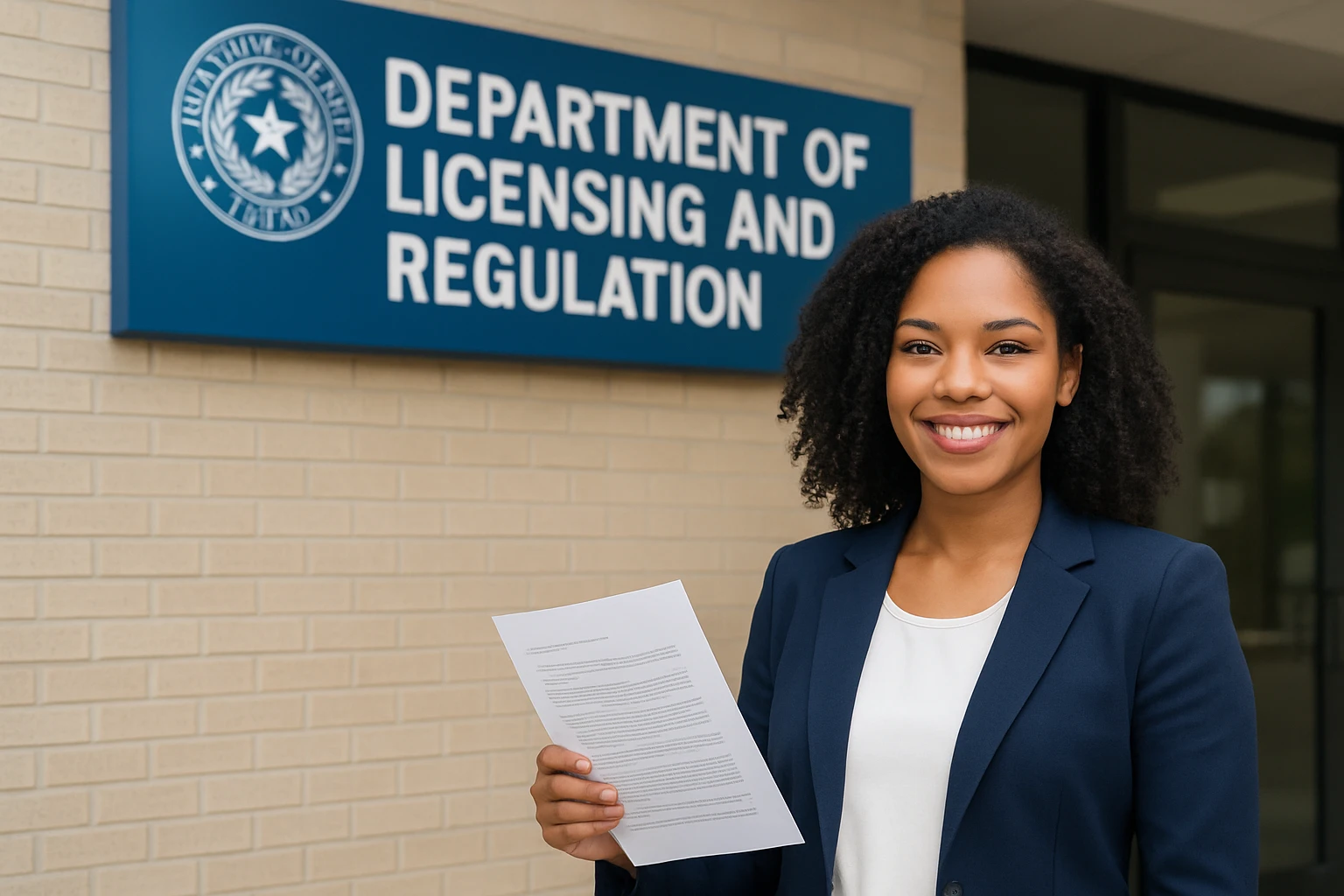
Start with the basic definition. TDLR is a Texas state agency responsible for licensing and regulating - Sports news licensing and regulation a broad range of occupations, businesses, facilities, and equipment in Texas. That scope is much wider than a single trade board, which is why people often land there even when they are not sure they should.
Location helps confirm you are looking at the right institution. Public sources place TDLR’s headquarters in the Ernest O. Thompson State Office Building in downtown Austin. The agency has also been helping Texans since 1909, so you are dealing with an old, established regulator — not a new portal with a narrow remit.
Rule: if you can’t name the exact industry, you don’t yet know whether TDLR is the right agency.
Scan the broad industry list, not just one profession
Open the official TDLR site - and scan the full regulated-industries menu. Do not tunnel in on the first profession that sounds close. The public list includes a wide mix of occupations and programs alongside electricians, cosmetologists, elevator and escalator safety, and water well drillers.
That range tells you what TDLR really does: it serves as a broad licensing-and-regulation hub. If you only look at one profession, you miss the agency’s actual pattern.
Separate TDLR from other Texas regulators
Do not assume one Texas agency covers every licensed activity. Some fields sit with separate boards or other state bodies. TDLR covers a lot, but not everything.
If you work in a space where regulation overlaps - Sports news regulation and licensing — small business, construction, consumer services, or adjacent questions — this step prevents jurisdiction mistakes. Seeing one familiar term on a menu does not make TDLR the answer to every nearby question.
Prepare your TDLR lookup before you act
Find the exact program in the Regulated Industries menu
Match your issue to the named program exactly as the site lists it. “Electricians” is not the same as a general contractor issue. “Tow Trucks, Operators and VSFs” is more precise than “towing.” “Barbering and Cosmetology” covers a different program path than a vague search for salon licensing.
Use the live menu over any static summary, since program details and organization can change over time.
Copy the exact program name as written.
Save the page URL once you find it.
Write down the task you need to complete before you click anything else.
If you can’t match your issue to a named program, stop and confirm before paying any fee or filing any form.
Decide whether you need to apply, renew, or manage a license
TDLR’s public entry points are task-based. The site gives direct actions such as “Apply for a License,” “Renew a License - Sports news texas tdlr renewal,” and “Manage Your License.” That matters because the agency does not funnel everyone through one generic application page.
Need
Start Here
Confirm Before Proceeding
New credential
Apply for a License
Exact program name, eligibility, required documents
Who the complaint concerns and which program applies
Note where complaints and enforcement live on the site
Do this before you think you need it. The official site highlights Complaints and Enforcement - Sports news contact maryland department labor as a main area, separate from licensing actions. That tells you TDLR does not just issue credentials; it also handles enforcement routes when something goes wrong.
For due diligence, that is useful. You are not only asking, “Can I get licensed?” You are also asking, “Where does this agency route disputes, compliance problems, or consumer harm?”
Run the process step by step
Open the correct program page first
Start from the program page, not from a search result preview. TDLR organizes work around specific license actions within specific programs. If you begin on the wrong page, you can easily read the right rule for the wrong occupation.
That mistake happens more than people admit. A search for “Texas license renewal” can surface fragments that sound right but belong to another program entirely.
Don’t treat a search snippet as the source of truth; use the official program page to finish the task.
Complete the application or renewal workflow
Once you are on the right page, follow the action flow the site gives you. TDLR regulates a broad range of occupations and businesses, not one narrow field, so the workflow can look different from program to program.
Publicly listed examples include barbers, electricians, massage therapists, midwives, tow truck operators, and weather modification. Those are very different regulatory contexts. Expect different forms, requirements, and instructions.
Confirm the program name again.
Choose the correct action: apply, renew, or manage.
Read the page-specific instructions before you upload, pay, or submit.
Save your account and license records for later
Keep a clean record set. Save confirmation screens, account emails, payment receipts, and license numbers. This is boring work — and it pays off the first time you need a renewal date, a status check, or a complaint reference.
I always tell people to make one folder for the agency, one subfolder for the program, and one note with exact page names. It turns a future scramble into a two-minute lookup.
Validate that you landed in the right place
Check the law that creates the agency
When you need certainty, go one layer deeper than the homepage. Chapter 51 of the Texas Occupations Code establishes TDLR and sets the framework for the agency’s responsibilities. That is the legal backbone behind the menus and forms.
You do not need to read the whole code every time. You do need to know that the agency’s authority is grounded in statute, not in a loose summary or a copied directory listing.
Confirm the governing board and advisory structure
TDLR’s governing board is the Texas Commission of Licensing and Regulation. Public agency materials say the commission has seven public members appointed by the Governor with the consent of the Texas Senate.
There is one more detail worth remembering: by law, commissioners cannot have business interests in a profession regulated by TDLR. That is a useful credibility marker when you are verifying whether a page or summary reflects the official structure.
Validation rule: if the program name, board name, or site path doesn’t match the official page, keep checking.
Use official contact and location cues to verify you’re on the real site
Check the obvious cues. Official site path. Official program title. Official contact area. Headquarters reference in Austin. These small signals help you distinguish the live authority from scraped content, stale summaries, or SEO pages that paraphrase the agency.
Validation Cue
What You Want to See
Red Flag
Program name
Matches the TDLR menu exactly
Generic or shortened wording
Board reference
Texas Commission of Licensing and Regulation
Unnamed “state board” language
Site path
Official TDLR domain and navigation
Copied text on a third-party site
Contact/location cues
Austin headquarters and official contact paths
No clear ownership or agency identity
Avoid the usual TDLR misses
Don’t confuse one occupation with the whole agency
The public regulated-industries list spans very different fields: Air Conditioning and Refrigeration Contractors, Barbering and Cosmetology, Elevator and Escalator Safety, and many more. That breadth is helpful, but it also tempts people to oversimplify.
A program page answers a program question. It does not answer every question about the entire agency. Keep your scope tight.
A long regulated-industries list is not a shortcut; it’s a reminder to verify the exact program every time.
Don’t skip the complaints and enforcement path
People often look only at licensing and forget enforcement. That is a mistake. TDLR’s public-facing site separates licensing, complaints, enforcement, and continuing education for a reason.
If your issue involves misconduct, unlicensed activity, or a dispute, the answer may live under Complaints and Enforcement instead of a license application screen. Go where the problem actually fits.
Don’t ignore the customer-service feedback loop
The public site has also featured a survey asking for feedback from people who had customer-service experiences within the previous two years. That may sound minor, but it signals something practical: the agency expects users to report friction, not just work around it.
Keep the order straight. First verify the regulator and the program. Then, if you are also comparing crypto-friendly betting options or promos, do that separately after you know which official rules matter to your situation.
The safest habit is also the fastest: match your issue to the exact TDLR program, verify the official page, and only then file, pay, or trust the answer.
That one move keeps a long menu from becoming a wrong turn — whether you are checking an electrician renewal, a tow-truck complaint, or a department of licensing and regulation texas question that only looks obvious from a search result. What issue are you trying to place right now, and what is the exact program name on the official site?
Betting52.com vets licensed Bitcoin-friendly sportsbooks and casinos, compares welcome and no-deposit crypto offers, and publishes news and guides for sharper decisions.
This content was optimized with SEOPro AI - – AI-powered SEO content optimization platform.
Top Crypto Sportsbooks for October 2026
BetUS
200% up to $1,000
Code: NEW200
18+. Full T&C's apply.
18+. Full T&C's apply. Sports bonus: 100% match up to $500. Casino bonus: 100% match up to $500. Enter promo code NEW200 at deposit and get up to a $1000 bonus. Valid on your first three (3) deposits. Available for all deposit methods. Minimum deposit of $50.
18+. Full terms apply. The Bet Back Bonus is available for new customers on first-time deposits of $50 or more. To redeem, select the offer in the cashier while completing your first deposit. Make your pick(s) in the Sportsbook and then select ‘Opt In to Use Your Bonus’. A Bet Back Bonus pop-up will display, select ‘Claim’ and then enter the risk amount to place your bet. If it wins, you keep your profits. If it loses, get 100% of your risk refunded as Free Play with only 1-time rollover. Free Play can then be used to place bets in the Sportsbook and earn cash. Additional T&Cs apply, please visit MyBookie to access the Help Center or contact Live Chat for more details.