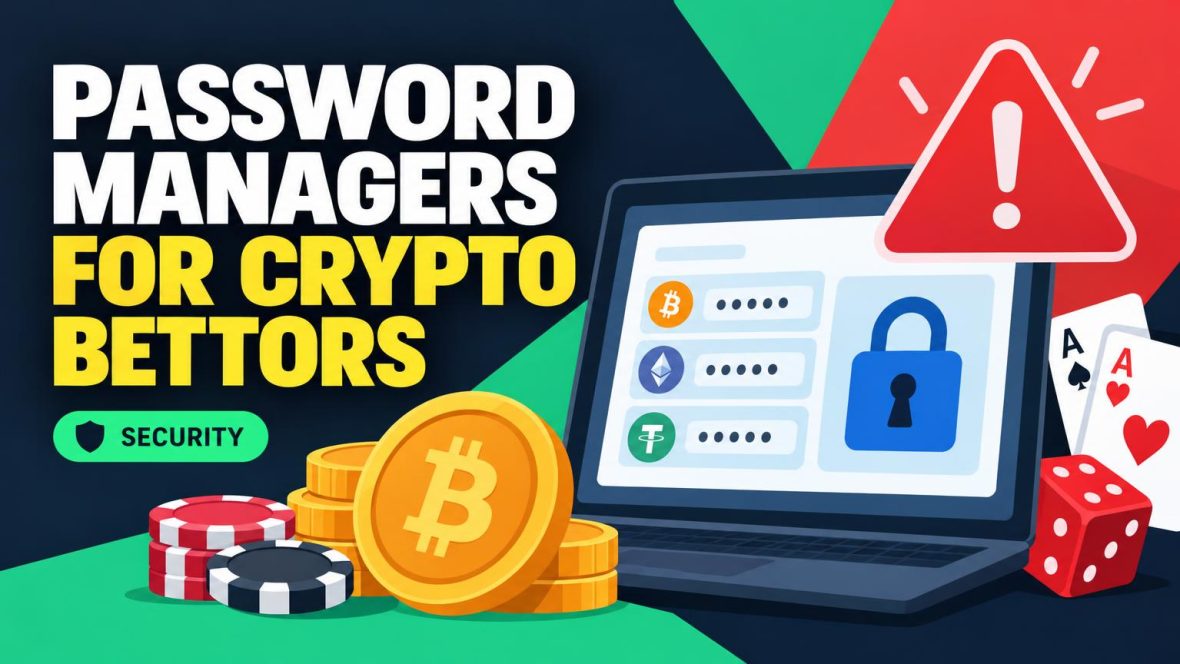

Password Managers for Crypto Bettors: The Risks to Avoid


BetNow

MyBookie

BetOnline

Xbet
One reused password can put several balances at risk.
A bettor checks sportsbook odds, moves funds through an exchange, then signs in to the email account tied to both. If the same password protects each login, a breach at one service could expose the others. A password manager makes unique, strong passwords practical without requiring anyone to memorize them.
The vault still needs protection. A convincing phishing page can steal a login, while a weak recovery method can undermine a strong vault password. Losing access to that recovery method can also mean losing access to the vault. Wallet seed phrases warrant separate, offline storage: placing one beside betting credentials raises the stakes of a vault compromise.
Match the manager to the risk
-
-
-
-
- A wallet recovery phrase is not a website password. None of these picks is a reason to put one in a password vault; keep it offline and follow the wallet’s backup guidance.
Bitwarden: a flexible vault for betting logins
- 01 For bettors who want flexible vault control.
Bitwarden is an open-source password manager for bettors managing sportsbook, exchange, and email logins. It keeps those credentials in an encrypted vault and offers both hosted and self-hosted setups. When locking down a sportsbook account, give it a password that is not used for any other betting-related login.
- Hosted service avoids running a vault server.
- Self-hosting is available for those who already maintain their own services.
- Supports passkeys.
- Self-hosting puts updates, backups, and uptime on the account holder.
- Vault access still needs a workable recovery plan.
1Password: an extra safeguard for vault sign-ins
For bettors seeking an extra sign-in safeguard.
1Password combines an account password with a Secret Key. A stolen password alone is therefore not enough to unlock the vault on a new device. The Secret Key needs safekeeping, though: losing it along with access to trusted devices can make recovery difficult.
Watchtower flags credentials exposed in known breaches, but alerts do not change passwords. Affected betting logins need prompt updates, as do any other accounts using the same password. A strong account password, secured reset email, and stronger two-factor authentication where available remain important.
A sensible pick when protection against a stolen vault password is a priority. Its breach alerts are useful only when acted on, and neither feature stops phishing or protects wallet seed phrases.
Keeper: secure credential delivery
For bettors who need to share credentials securely.
Keeper’s encrypted vault and credential-sharing feature can help deliver a login to an authorized person without sending the password through a chat or email thread. Optional BreachWatch monitoring can flag compromised passwords.
That makes Keeper useful when a credential genuinely needs to change hands. It does not make shared sportsbook access acceptable: the account holder still needs to check the operator’s rules before giving anyone else access.
A securely delivered password can still end up in the wrong hands—or with someone the sportsbook does not allow to use the account. Shared access can also complicate identity checks and withdrawal disputes. If the operator requires one person per account, sharing the login remains a bad idea regardless of the transfer method.
KeePass: a local vault for betting logins
For bettors who prefer local credential storage.
KeePass is a free, open-source manager that stores sportsbook and email credentials in an encrypted database file. It suits bettors comfortable deciding where that file lives and how to recover it if a device fails.
- The database stays in a location the bettor chooses.
- Supports a master password and key files.
- cons
- A lost file without a usable backup can mean lost access.
- Syncing copies across devices requires care to avoid conflicts or exposure.
- Device malware can still capture credentials when the vault is unlocked.
Dashlane: exposure alerts for betting logins
For bettors focused on exposed-account monitoring.
Dashlane stores credentials in an encrypted vault and uses Password Health to flag weak or reused passwords. Its dark web monitoring can alert bettors when monitored account information appears in known exposures. For someone using the same email across sportsbooks and exchanges, those warnings offer a reason to check and replace affected passwords promptly.
An alert is not a safety net: monitoring may miss an exposure, cannot stop phishing, and cannot undo an account takeover. Bettors should keep a plan for recovering an account after a suspected breach, including access to the email used for password resets.
Dashlane suits bettors who want password-health checks alongside exposure alerts. Its value depends on replacing flagged credentials quickly; it does not replace phishing awareness or account recovery preparation.
Put the vault to work safely
- Choose a recovery plan
A hosted vault is simpler to maintain; a local database needs a deliberate backup and synchronization plan.
- Replace reused passwords
Generate a different password for every sportsbook, exchange, and email account.
- Protect the reset routes
Enable multifactor authentication on the vault and email. Both matter to crypto betting account security.
- Test backup access
Confirm that recovery methods work before a phone is lost or replaced.
- Check the site before signing in
Autofill is not proof a page is genuine. Keep wallet recovery phrases out of ordinary login entries.
For most bettors, 1Password is the straightforward pick when vault sign-in protection matters most. Bitwarden suits those wanting hosting flexibility; KeePass is a better fit for someone willing to maintain a local file and its backups.
Top Crypto Sportsbooks for November 2026

BetUS

BetNow

MyBookie

BetOnline