18+. Full T&C's apply. Sports bonus: 100% match up to $500. Casino bonus: 100% match up to $500. Enter promo code NEW200 at deposit and get up to a $1000 bonus. Valid on your first three (3) deposits. Available for all deposit methods. Minimum deposit of $50.
18+. Full terms apply. The Bet Back Bonus is available for new customers on first-time deposits of $50 or more. To redeem, select the offer in the cashier while completing your first deposit. Make your pick(s) in the Sportsbook and then select ‘Opt In to Use Your Bonus’. A Bet Back Bonus pop-up will display, select ‘Claim’ and then enter the risk amount to place your bet. If it wins, you keep your profits. If it loses, get 100% of your risk refunded as Free Play with only 1-time rollover. Free Play can then be used to place bets in the Sportsbook and earn cash. Additional T&Cs apply, please visit MyBookie to access the Help Center or contact Live Chat for more details.
21+. Full T&C's apply. WELCOME OFFERS ARE ONLY AVAILABLE TO NEW CUSTOMERS ON THEIR FIRST DEPOSIT OF $50 OR MORE. THE BONUS IS CREDITED AS BONUS BETS WITH 10-TIME PLAYTHROUGH REQUIREMENT. TO CLAIM THIS BONUS, REDEEM PROMOCODE XBCRYPTO100 IN THE CASHIER WHEN COMPLETING YOUR FIRST DEPOSIT.
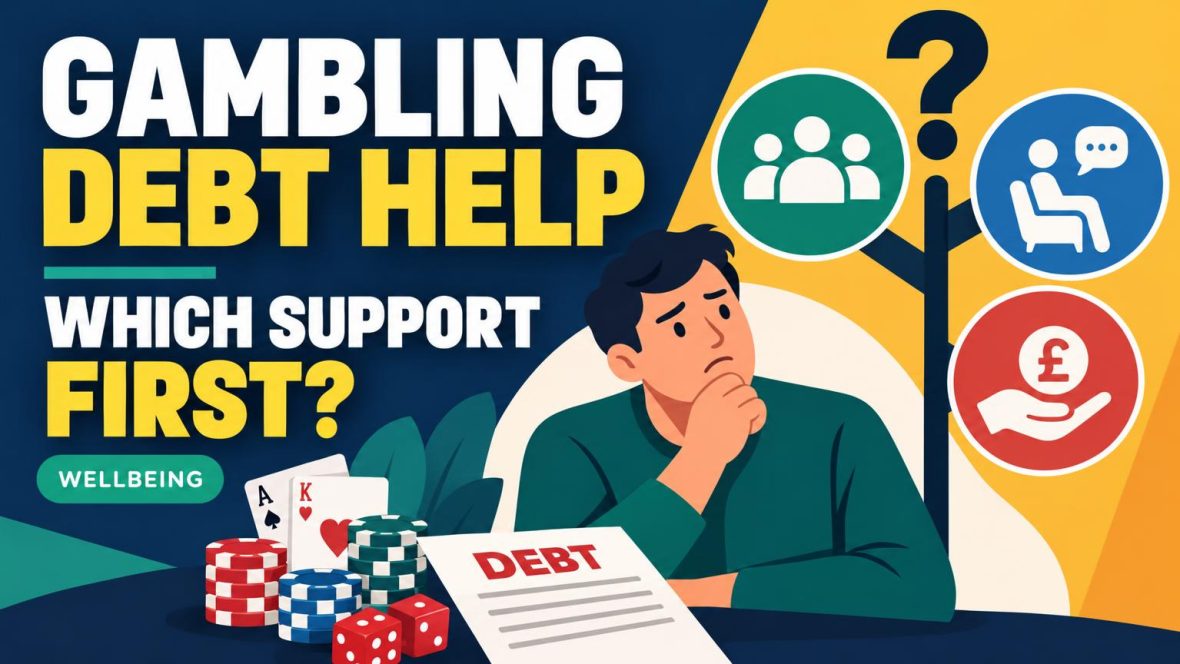
The next bet can feel like a solution when a bill cannot wait.
The rent is due on Friday, the account is short, and a wager starts to look like a way out. Another loss could take money needed for food or housing. If gambling is continuing, blocking access to bets may be the most useful first step: self-exclusion, a bank gambling block, or support from a trusted person can create breathing room.
Overdue bills still need attention. A debt adviser can help identify urgent payments and discuss options with creditors, while gambling support can make a repayment plan easier to sustain. If food, housing, or utilities are at risk, help with those essentials should not wait. The aim is to prevent another loss and address what is already owed.
Urgent checks
Check what cannot wait
Immediate danger or risk of self-harm
Contact local emergency or crisis services now. Gambling and debt support can follow once the person is safe.
An eviction date or loss of housing
Contact a local housing adviser or emergency housing service promptly, with any notices and dates to hand.
A court hearing or legal deadline
Seek local legal advice as soon as possible. Missing a deadline can limit the available options.
No money for food, heat, or essential medication
Contact local emergency assistance or welfare services for immediate needs, then speak with a debt adviser about the wider shortfall.
Keep the exact deadline in view
A letter threatening action is not always the same as a dated court hearing or eviction notice. Check what it actually says, and give any named date to the relevant specialist when asking for help.
Comparing support
Choose a service that can handle the immediate problem
01
Cost and independence
Free nonprofit help may be a useful starting point, but funding arrangements vary. A paid service should explain its fees and any creditor relationships.
Look for
Clear fees, funding and potential conflicts
Watch out for
Upfront payments without a clear service agreement
02
Privacy and credentials
Check how personal and financial information is stored or shared, and whether the adviser holds credentials required locally.
Look for
A written privacy policy and verifiable credentials
Watch out for
Requests for full account access before an explanation
03
Gambling-specific support
Gambling support can help address urges and barriers to further betting; debt advisers handle budgets and creditor discussions. Neither automatically provides legal advice.
Look for
Experience with gambling harm and appropriate referrals
Watch out for
One service claiming to solve every issue
04
Availability and deadlines
A service with a long wait may still help later, but an imminent hearing or eviction notice calls for timely local specialist advice.
Look for
A response time that fits the deadline
Watch out for
Waiting for routine appointments when action is due
Check before committing
Before sharing documents or accepting a repayment plan, confirm credentials, total fees and local rules. Guidance on responsible crypto betting practices may inform future safeguards, but it cannot negotiate with a creditor.
Put barriers between gambling and essential money
If gambling is still taking money from the account, waiting until every debt is sorted can leave less for rent, food and bills. Access barriers and debt support can start at the same time. These barriers create breathing room; they do not resolve the debts or remove the urge to gamble.
Self-exclusion schemes can restrict access to participating gambling sites or venues, sometimes for a chosen period. The coverage varies, so it is worth checking which operators are included. Some banks and payment providers also offer gambling transaction blocks. These may take time to activate and may not catch every payment, particularly if a transaction is classified differently.
Top Crypto Sportsbooks for November 2026
BetUS
200% up to $1,000
Code: NEW200
18+. Full T&C's apply.
18+. Full T&C's apply. Sports bonus: 100% match up to $500. Casino bonus: 100% match up to $500. Enter promo code NEW200 at deposit and get up to a $1000 bonus. Valid on your first three (3) deposits. Available for all deposit methods. Minimum deposit of $50.
18+. Full terms apply. The Bet Back Bonus is available for new customers on first-time deposits of $50 or more. To redeem, select the offer in the cashier while completing your first deposit. Make your pick(s) in the Sportsbook and then select ‘Opt In to Use Your Bonus’. A Bet Back Bonus pop-up will display, select ‘Claim’ and then enter the risk amount to place your bet. If it wins, you keep your profits. If it loses, get 100% of your risk refunded as Free Play with only 1-time rollover. Free Play can then be used to place bets in the Sportsbook and earn cash. Additional T&Cs apply, please visit MyBookie to access the Help Center or contact Live Chat for more details.
21+. Full T&C's apply. WELCOME OFFERS ARE ONLY AVAILABLE TO NEW CUSTOMERS ON THEIR FIRST DEPOSIT OF $50 OR MORE. THE BONUS IS CREDITED AS BONUS BETS WITH 10-TIME PLAYTHROUGH REQUIREMENT. TO CLAIM THIS BONUS, REDEEM PROMOCODE XBCRYPTO100 IN THE CASHIER WHEN COMPLETING YOUR FIRST DEPOSIT.
Protecting essential spending is another practical step: identify the next rent or mortgage payment, utilities and food costs, then set that money aside where it is less likely to be spent impulsively. A trusted person might help with that plan or provide support, but only if involving them feels safe. Guidance on telling someone about a gambling problem can help with deciding whom to approach.
A barrier is not a debt plan
Keep contacting creditors or a debt adviser about missed payments. A block may slow new gambling losses, but existing bills and deadlines still need attention.
Choose support for the gambling itself
Debt advice can help organize repayments, but it may not address the urge to gamble. The best first contact depends less on finding an ideal program than on what feels reachable today.
A gambling helpline offers a conversation soon, often without an appointment. It can help someone talk through a recent loss, identify local services and decide on a next step; availability and privacy arrangements vary by provider.
Peer support offers regular contact with people who recognize the cycle of stopping and starting again. Meetings can make it easier to stay accountable between appointments, though they are not a substitute for clinical care.
Therapy offers structured work on triggers, urges and gambling patterns over time. Someone comparing online therapy options for gambling problems can check whether the provider has gambling-specific experience, what sessions cost and how soon treatment can begin.
Frequent urges, repeated attempts to stop or chasing losses are reasons to seek gambling-specific help even if the debt still looks manageable. A helpline call or first meeting can open the door to longer-term support; there is no need to wait until the finances are in crisis.
When debt advice should come first
Missed payments, collection calls, or a pile of balances that no longer adds up can make a reputable debt adviser the most useful first contact. An adviser can help sort urgent bills from less pressing debts and work out what may be affordable after essential living costs. This is especially valuable when several creditors are involved or a repayment demand feels impossible to meet.
The first conversation does not require a perfect record. Recent bank statements, creditor letters, loan or card balances, income details, and a rough list of rent, food, utilities, and other essentials give an adviser a starting point. Any court papers, shutoff notices, or deadlines should be mentioned immediately, even if other figures are still missing.
Useful questions include:
Which payments need attention first to protect housing and basic services?
What repayment amount leaves enough for essentials, and what happens if income changes?
Is the advice free? Are there fees for any proposed plan, and how are they paid?
Will the adviser contact creditors, or must the person do that? What permission is needed before anyone acts on their behalf?
A trustworthy adviser should explain options and costs clearly, without pushing a plan before checking the full budget. Debt advice cannot prevent new gambling losses, so it works best alongside barriers that protect money and support for the gambling itself.
When specialist advice is needed
A general debt helpline can help sort bills and explain options, but some situations need locally qualified advice. If a lawsuit has been filed, a court deadline or hearing date should be checked promptly with a legal professional or an approved local advice service. Missing it can limit the available options, even while other support is being arranged.
Insolvency may affect property, income and future borrowing, so its consequences should be reviewed under local rules before paperwork is signed. Jointly held debts also need careful attention: an arrangement made by one borrower may not release the other. If fraud is suspected—such as borrowing in someone else’s name—preserving statements and messages and seeking legal advice is safer than guessing who is liable.
Paid debt services deserve scrutiny. A credible provider should explain its fees, what it can actually do, and whether creditors will still need to be contacted. Promises to make debt disappear are not a substitute for a clear plan.
Check the offer before paying
Be wary of large upfront fees, guarantees that debt will be erased, or instructions to stop speaking with creditors. Check a provider’s local registration or credentials and get its fees and proposed steps in writing.
Which call comes first?
The first contact should match the problem most likely to worsen before help arrives. If money is still going into betting, a gambling helpline or specialist service can help start a pause, while bank gambling blocks and self-exclusion make further play harder. A debt advice appointment can be arranged at the same time; gambling does not have to stop before someone seeks help with debts.
If a rent payment, utility disconnection notice or creditor deadline is imminent, a debt adviser or relevant local legal service may be the more time-sensitive contact. They can help work out what the notice requires and what options remain. Gambling support still matters, but it should not delay a response to a dated letter.
When both pressures are active, make two contacts rather than expecting one service to handle everything. For example, if a creditor needs a reply tomorrow and betting losses continue tonight, debt or legal help can address the deadline while gambling support helps interrupt play. If only one call is possible immediately, start with the deadline unless an immediate safety concern takes priority. The first contact is a starting point, not a choice to abandon the other kind of help.
A note of the next deadline, essential bills and current gambling access can make either conversation easier.
First-day checklist
Start before the paperwork is complete
Make the first contact
A rough picture of overdue essentials, creditor pressure and recent gambling losses is enough to begin. Ask what the service can do today and which details can follow later.
Write down the dates that matter
Record any court date, housing deadline, disconnection notice or payment due soon. If a date is unclear, keep the notice handy and ask the adviser to help identify it.
Confirm who will do what
Note the service’s name, contact details and any case reference. Check whether it will contact creditors, make a referral or call back—or whether those tasks remain with the person seeking help.
Arrange the next contact
Book a follow-up with debt advice and, where needed, gambling support. Record the appointment and any documents requested; do not wait to assemble a complete debt list before taking the first step.
A setback does not cancel the debt plan
If gambling resumes, new losses or missed payments should be reported to the adviser so the plan reflects what has changed. Renewing blocks and contacting gambling support can happen alongside creditor calls. Guidance on how to recover after a gambling relapse may help with that next contact; existing deadlines still need attention.
Key Takeaways
Safety firstIf someone may harm themselves, contact emergency or crisis services before making a financial plan.
Limit new lossesSelf-exclusion and payment blocks can reduce further losses while help is arranged; they do not erase existing debts.
Protect essentialsFood, housing, utilities and court deadlines need prompt attention from the relevant provider, debt adviser or legal specialist.
Continue bothDebt advice and gambling support solve different problems. Neither has to wait until the other is complete.
Conclusion
Today, identify the risk that cannot wait and contact the service equipped to address it. Other help can follow—or run alongside that first call.
Top Crypto Sportsbooks for November 2026
BetUS
200% up to $1,000
Code: NEW200
18+. Full T&C's apply.
18+. Full T&C's apply. Sports bonus: 100% match up to $500. Casino bonus: 100% match up to $500. Enter promo code NEW200 at deposit and get up to a $1000 bonus. Valid on your first three (3) deposits. Available for all deposit methods. Minimum deposit of $50.
18+. Full terms apply. The Bet Back Bonus is available for new customers on first-time deposits of $50 or more. To redeem, select the offer in the cashier while completing your first deposit. Make your pick(s) in the Sportsbook and then select ‘Opt In to Use Your Bonus’. A Bet Back Bonus pop-up will display, select ‘Claim’ and then enter the risk amount to place your bet. If it wins, you keep your profits. If it loses, get 100% of your risk refunded as Free Play with only 1-time rollover. Free Play can then be used to place bets in the Sportsbook and earn cash. Additional T&Cs apply, please visit MyBookie to access the Help Center or contact Live Chat for more details.
21+. Full T&C's apply. WELCOME OFFERS ARE ONLY AVAILABLE TO NEW CUSTOMERS ON THEIR FIRST DEPOSIT OF $50 OR MORE. THE BONUS IS CREDITED AS BONUS BETS WITH 10-TIME PLAYTHROUGH REQUIREMENT. TO CLAIM THIS BONUS, REDEEM PROMOCODE XBCRYPTO100 IN THE CASHIER WHEN COMPLETING YOUR FIRST DEPOSIT.
Tony is the founder and author behind Betting52, where he writes about crypto sports betting, offshore sportsbooks and the wider world of online sports betting. His work covers crypto sportsbook reviews, Bitcoin and cryptocurrency payment methods, betting bonuses, sportsbook comparisons, betting odds, markets and practical betting guides. Tony's aim is to make sports betting information easier to understand, helping readers research sportsbooks, compare their options and make more informed decisions before placing a bet. Alongside sportsbook and crypto betting content, he is interested in the technology, payment systems and security considerations shaping the future of online sports betting.