18+. Full T&C's apply. Sports bonus: 100% match up to $500. Casino bonus: 100% match up to $500. Enter promo code NEW200 at deposit and get up to a $1000 bonus. Valid on your first three (3) deposits. Available for all deposit methods. Minimum deposit of $50.
18+. Full terms apply. The Bet Back Bonus is available for new customers on first-time deposits of $50 or more. To redeem, select the offer in the cashier while completing your first deposit. Make your pick(s) in the Sportsbook and then select ‘Opt In to Use Your Bonus’. A Bet Back Bonus pop-up will display, select ‘Claim’ and then enter the risk amount to place your bet. If it wins, you keep your profits. If it loses, get 100% of your risk refunded as Free Play with only 1-time rollover. Free Play can then be used to place bets in the Sportsbook and earn cash. Additional T&Cs apply, please visit MyBookie to access the Help Center or contact Live Chat for more details.
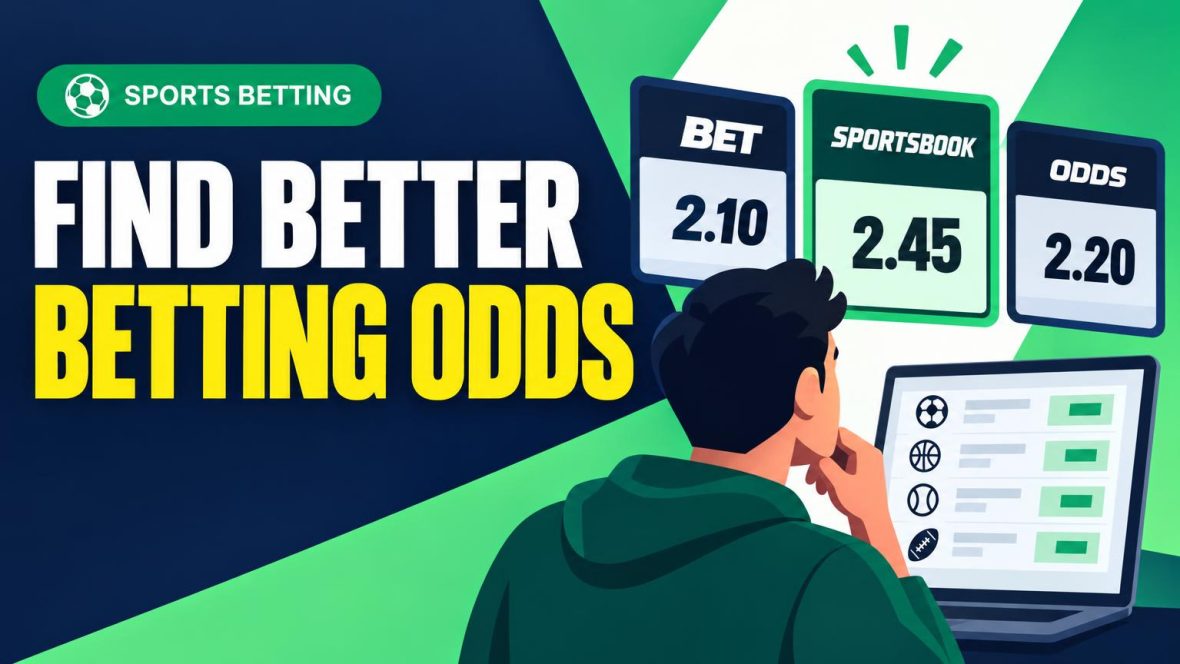
A bettor finds the same team priced at -110 in one sportsbook and +100 in another. On a $20 stake, that is $18.18 versus $20 in profit if the bet wins. The pick has not changed, but its potential return has.
Prices can also move while a bet slip is open, especially near the start of a game or after lineup news. Comparing a few sportsbooks helps, but no single book has the best odds every time. The comparison only counts if the wager is genuinely the same: check the team, spread or total, and any special rules. Then check the price again on the confirmation screen; the number first spotted may no longer be available.
Why the best price moves
Sportsbooks do not all react to the same game at the same moment. A wave of bets on one side may prompt one book to shorten its odds, while another holds its price because its exposure is smaller. Different risk limits and update speeds also help explain why sportsbooks post different odds.
A price gap can vanish in seconds, especially near kickoff or during live play. A book that briefly offers the top number is not necessarily the best choice for the next wager. A more useful pattern is which books regularly offer strong prices for a particular league, bet type, and stake size.
Top Crypto Sportsbooks for October 2026
BetUS
200% up to $1,000
Code: NEW200
18+. Full T&C's apply.
18+. Full T&C's apply. Sports bonus: 100% match up to $500. Casino bonus: 100% match up to $500. Enter promo code NEW200 at deposit and get up to a $1000 bonus. Valid on your first three (3) deposits. Available for all deposit methods. Minimum deposit of $50.
18+. Full terms apply. The Bet Back Bonus is available for new customers on first-time deposits of $50 or more. To redeem, select the offer in the cashier while completing your first deposit. Make your pick(s) in the Sportsbook and then select ‘Opt In to Use Your Bonus’. A Bet Back Bonus pop-up will display, select ‘Claim’ and then enter the risk amount to place your bet. If it wins, you keep your profits. If it loses, get 100% of your risk refunded as Free Play with only 1-time rollover. Free Play can then be used to place bets in the Sportsbook and earn cash. Additional T&Cs apply, please visit MyBookie to access the Help Center or contact Live Chat for more details.
Before confirming a wager, compare current quotes for the exact same selection and terms, then check the price again on the bet slip. A familiar favorite may be convenient, but yesterday’s best book has no claim on today’s bet.
Shortlist
Keep only sportsbooks where the bet is placeable
01
Legal access
A sportsbook belongs on the shortlist only if it is licensed where the bettor is located and accepts wagers there. Availability can change across state or national borders.
Look for
A licensed app that accepts bets in the bettor’s location.
Avoid
An attractive quote from a book that cannot legally take the wager.
02
The exact market and its rules
Compare the same selection, line, and game period—not merely the same teams or players. Check whether overtime counts and how postponements, player absences, or ties are settled; a better price may come with different terms.
Look for
Matching markets with clear settlement and void rules.
Avoid
Treating similar-looking bets as interchangeable.
03
Reliable access
A useful book makes the intended market easy to find and keeps the bet slip responsive when odds move. If the app regularly stalls or a market disappears at busy times, its displayed price is less valuable.
Look for
Markets that remain accessible through normal pregame traffic.
Avoid
Relying on a quote that rarely reaches a confirmed bet slip.
04
An account ready to bet
Verification, a usable deposit method, sufficient balance, and any stake limits all matter before a time-sensitive comparison. A quote that cannot be accepted at the intended stake is not a practical alternative.
Look for
A verified, funded account that permits the planned stake.
Avoid
Counting signup offers or displayed odds as immediately available.
Use odds screens to find candidates
An odds-comparison screen can narrow a search to a few promising prices. Its top number is a lead, not an offer: feeds can lag, and a selection may disappear before the sportsbook’s bet slip opens.
Check what the screen is comparing before sorting by price:
Participating books: Rankings cover only sportsbooks in the feed. An omitted local book might have a better price.
Update times: A timestamp beside each quote is more useful than a general page-refresh time, especially near kickoff.
Market coverage: Match the event, side, line, and bet type. A screen with broad moneyline coverage may show few player props.
Odds format: Set listings to the same format—American, decimal, or fractional—before comparing them.
Source links: A link to the exact event and selection makes a quote easier to check than a link to the sportsbook homepage.
Open promising selections at their sportsbooks and inspect the live bet slip. If the screen shows +110 but the slip shows +105, the earlier quote is no longer the price available.
Check the sportsbook before submitting
An odds screen points to a possible price; the sportsbook’s own app or site shows what can actually be placed. Open the exact event and market there, then check the current odds and line, permitted stake, and relevant wager terms. A price of -110 on over 2.5 goals is not the same bet as -110 on over 3.5. For a player prop, check what happens if the player does not start.
Saving or favoriting markets can make them easier to find again while comparing books, but it does not reserve a price. Before submitting, review the bet slip for the selected side, line, odds, stake, and potential payout. Some apps change the price after selection or ask for approval when it moves.
If the line changes, reassess the bet rather than relying on the earlier quote. Check whether an “accept all odds changes” setting is enabled; turning it off allows each change to be reviewed. The confirmation screen shows the wager the sportsbook accepted.
Compare the wager, not just the odds
A better price matters only when it applies to the same bet. This illustrative comparison holds the event, market, selection, and line constant before judging the odds:
Sportsbook
Event
Market
Selection
Line
Odds
A
Celtics vs. Knicks
Point spread
Celtics
−2.5
−110
B
Celtics vs. Knicks
Point spread
Celtics
−2.5
−105
C
Celtics vs. Knicks
Point spread
Celtics
−3
+100
Book B offers the better price on the matching wager: a $100 stake would profit $95.24 instead of $90.91 at Book A. Book C’s +100 looks more generous, but it is not an equivalent offer. If the Celtics win by exactly three points, −2.5 wins while −3 pushes, returning the stake rather than paying a profit.
The same caution applies to player props. A standard “over 24.5 points” bet may count overtime, while a promotional “25+ points” offer may specify regulation time only. A player who reaches 25 points in overtime could therefore win the standard bet and lose the promotion. Promotional injury provisions or bonus-bet payouts can also change the result or its value. Before comparing prices, check the selection, threshold, eligible game time, and settlement rules shown for each offer.
What −105 buys over −110
Suppose two sportsbooks offer the same team at the same −3.5 spread, with identical settlement rules. One lists −110 and the other −105. On a $110 stake, the difference looks small, but it is measurable:
Price
Profit if it wins
Total returned
Break-even win rate
−110
$100.00
$210.00
52.38%
−105
$104.76
$214.76
51.22%
Both wagers lose the full $110 if the pick fails. The −105 price pays about $4.76 more per win on that stake and requires a win rate roughly 1.16 percentage points lower to break even. Those break-even figures assume repeated bets at the stated price, with no pushes or other adjustments.
The lower threshold is an advantage, not proof that the wager is worth making. Profitability also depends on how often the outcome actually wins. If a bettor reasonably estimates its chance at 52%, −105 offers a small theoretical edge while −110 does not. If the true chance is 50%, both prices are losing propositions despite −105 being the better deal. That distinction is central to how betting prices relate to value: shopping for odds improves the payout on a chosen bet, but it cannot rescue a poor assessment of the pick.
Where the biggest gaps appear
Major NFL spreads and totals appear at many sportsbooks, so they are straightforward to compare but may show only small price differences. On Sunday morning, one book might list an NFL underdog at +3 (−110) and another at +3 (−105). The second quote pays more for the same result, provided the settlement terms match. A third book offering +3.5 (−120) is a different comparison: the extra half-point could matter more than the higher cost if the favorite wins by exactly three.
Totals require the same two-part check. Over 47.5 at −110 is not interchangeable with over 48 at −105; a game ending on 48 wins the first wager and pushes the second. Prices also change near kickoff, so a book that looks strongest in the morning may not lead when the bet is placed. Checking several sportsbooks with competitive NFL odds is more useful than treating one as a permanent winner.
Player props and smaller markets can show wider gaps because books may post different numbers or update them at different times. Before chasing a standout price, check the exact stat definition, overtime treatment, injury-related settlement rules, and any lower stake limit. A generous quote is less useful if it applies to a different wager or cannot take the intended amount.
Treat promotions as a separate price
A boosted line can look like the best odds on a comparison screen, but it is not the sportsbook’s ordinary market price. Compare standard odds first. Then assess the promotion as a separate, limited opportunity.
Suppose a book offers +120 instead of +105 on a selection, but caps the boost at $10. On that stake, the boost adds $1.50 in profit if the bet wins. It does not make the book’s regular +105 price the best choice for a larger wager.
Before counting a boost, sign-up offer, or loyalty reward as extra value, check whether the bettor and the specific wager qualify. A first-bet offer may exclude existing accounts; a boost may apply only to a named market. Also check the maximum eligible stake and the deadline for placing the bet—especially if the odds may move before then.
Check what can be withdrawn
Promotional winnings may be paid as bonus bets or credits rather than cash. Read the terms for any wagering requirement, expiry date, and restrictions on withdrawing winnings. A higher displayed return matters less if much of it cannot be cashed out directly.
Pre-wager checklist
Make the price check a habit
Pin down the exact bet
Record the event, market, selection, line and intended stake. A different spread or player-prop threshold is not simply a different price.
Scan books that can take the wager
The case for line shopping does not require checking every sportsbook. Compare the eligible shortlist for the same bet, noting the best available quotes.
Verify the leaders
Open the leading books and check the live bet slips, not just the comparison screen. Confirm the line, odds, settlement rules and any stake limit; a stale quote or mismatched rule can erase an apparent advantage.
Reconsider the wager at that price
Ask whether the bet still looks worthwhile at the odds actually offered. If the useful price has moved or only a different bet remains, passing is a valid outcome.
Keep the stake within a preset limit
Set a maximum before submitting, and check the confirmation screen for the accepted terms. Better odds improve the potential return, but the entire stake can still be lost.
Conclusion
A quick comparison is useful only when it leads to a placeable, matching bet at a confirmed price. The final decision can still be no bet.
Top Crypto Sportsbooks for October 2026
BetUS
200% up to $1,000
Code: NEW200
18+. Full T&C's apply.
18+. Full T&C's apply. Sports bonus: 100% match up to $500. Casino bonus: 100% match up to $500. Enter promo code NEW200 at deposit and get up to a $1000 bonus. Valid on your first three (3) deposits. Available for all deposit methods. Minimum deposit of $50.
18+. Full terms apply. The Bet Back Bonus is available for new customers on first-time deposits of $50 or more. To redeem, select the offer in the cashier while completing your first deposit. Make your pick(s) in the Sportsbook and then select ‘Opt In to Use Your Bonus’. A Bet Back Bonus pop-up will display, select ‘Claim’ and then enter the risk amount to place your bet. If it wins, you keep your profits. If it loses, get 100% of your risk refunded as Free Play with only 1-time rollover. Free Play can then be used to place bets in the Sportsbook and earn cash. Additional T&Cs apply, please visit MyBookie to access the Help Center or contact Live Chat for more details.
Tony is the founder and author behind Betting52, where he writes about crypto sports betting, offshore sportsbooks and the wider world of online sports betting. His work covers crypto sportsbook reviews, Bitcoin and cryptocurrency payment methods, betting bonuses, sportsbook comparisons, betting odds, markets and practical betting guides. Tony's aim is to make sports betting information easier to understand, helping readers research sportsbooks, compare their options and make more informed decisions before placing a bet. Alongside sportsbook and crypto betting content, he is interested in the technology, payment systems and security considerations shaping the future of online sports betting.
The [nodelink id="8309b5e1-9c28-4cba-ae0a-c797a07350ea"]implied probability behind negative odds[/nodelink] comes from comparing the amount risked with the…