


How Sports Betting Oracles Put Match Results On-Chain
September 20, 2026 4 Views
A sports betting oracle is not usually the system that records the match. The league’s…
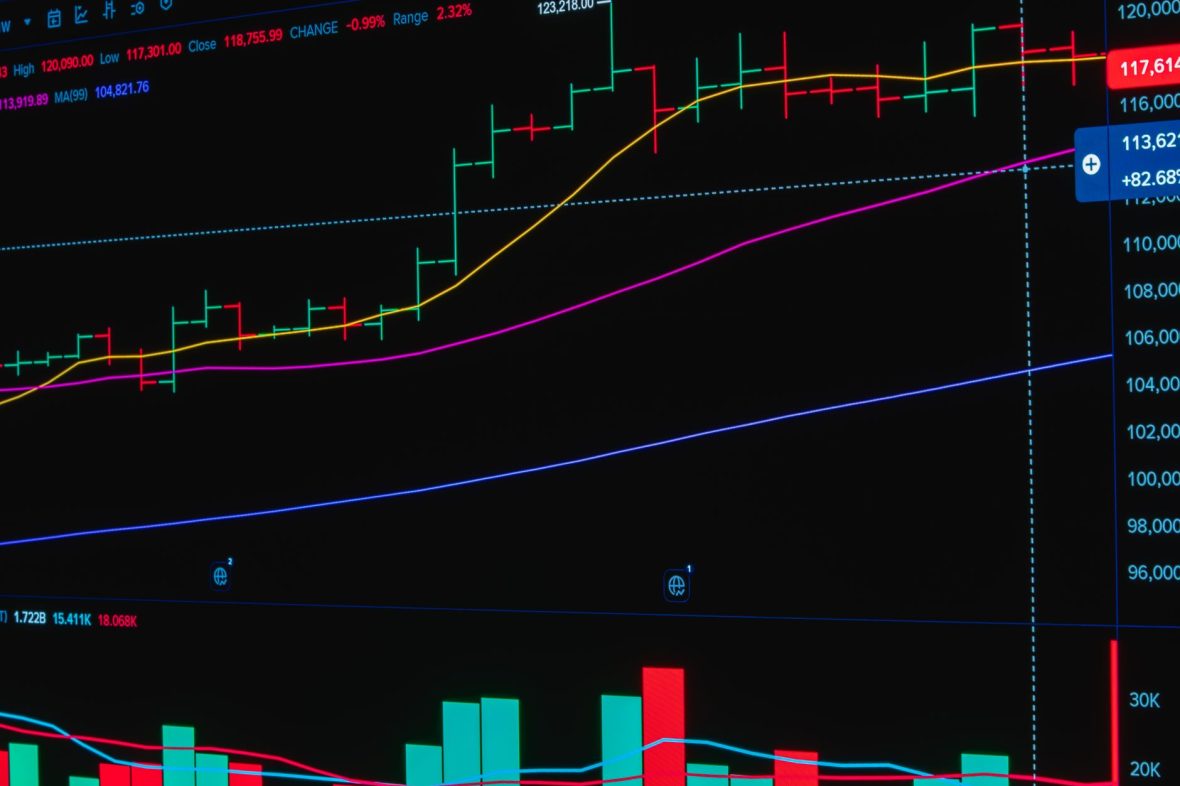
A 62-cent share is a price tag, not a promise of 62 cents back.
A trader buys 100 “Yes” shares at $0.62. The account is charged $62—the entry cost. If the event resolves Yes, each winning share pays $1, so the total payout is $100. The profit is the difference: $100 minus $62, or $38, before fees. If the event resolves No, those shares pay $0 and the $62 stake is lost.


These figures describe different moments in the trade. Market price is the current cost of one share; entry cost is price multiplied by quantity; payout is what resolution returns; and profit or loss compares that payout with the amount paid. Selling before resolution adds another price: the exit price, which can lock in a gain or loss without waiting for the outcome.
For a binary contract that pays $1 when an event occurs, a Yes price of $0.62 is commonly read as roughly a 62% implied probability. The conversion is simple: divide the price by the $1 maximum payout. A No price near $0.38 would tell the same story in an ideal, frictionless market.
That estimate changes through trading. If buyers become more confident, they may accept higher asking prices, pushing the Yes quote toward $0.70 or beyond. If new information weakens the case, sellers may accept lower bids and pull the quote down. Prices therefore act as a continuously revised consensus shaped by available orders—not as the output of a fixed formula.
The displayed number also needs context. A thin market may jump after one modest trade, while a liquid market usually requires more capital to move. Bid–ask spreads can mean the last trade, best bid, and best ask imply slightly different probabilities. Fees alter the effective break-even point, and traders may demand compensation for uncertainty, locked-up funds, or hard-to-hedge risk.
For those reasons, 62% is best treated as a compact market forecast, not a certified probability or guarantee.
When precision matters, compare the best bid, best ask, last trade, spread, and recent volume rather than relying on one displayed price.
A winning statement such as “the shares paid $100” describes the gross settlement payout. The gain is only the amount left after subtracting the $62 purchase cost—and any trading, withdrawal, or settlement fees charged by the venue.
A No share reverses the payoff. If No costs $0.38, 100 shares cost $38 and settle at $100 when the event does not happen, producing a $62 pre-fee profit. If the event happens, they settle at zero and the $38 purchase price is lost.
In a perfectly frictionless binary market, complementary Yes and No prices would total $1. Displayed quotes often differ because the screen may show separate best asking prices, last-traded prices from different moments, or rounded values. Thin liquidity, bid-ask spreads, and fees can widen the mismatch. For example, Yes offered at $0.63 and No offered at $0.40 total $1.03; that does not create a guaranteed profit because both figures are prices to buy, not prices at which the positions can necessarily be sold.
The same principle extends to several mutually exclusive and collectively exhaustive outcomes. Only the winning outcome redeems at $1, so their frictionless prices should sum to roughly $1. A $0.25 share costs $25 per 100 and returns $100 if that outcome wins. Real quotes may sum above or below $1 for the same spread, timing, liquidity, and fee reasons.
Buying 100 Yes shares at $0.62 costs $62. If those shares are later sold at $0.75, the sale produces $75, creating a $13 realized profit before fees:
($0.75 − $0.62) × 100 = $13
Once the sale executes, the position is closed. The market could eventually settle at $1 or $0 without changing that $13 trading profit; the buyer who took the shares now carries the settlement risk. This is the central distinction when selling prediction shares before settlement.
Before execution, however, the gain is only unrealized. A displayed price of $0.75 may value the position at $75 on screen, but that paper gain can shrink if the quote moves.
The quote also may not apply to every share. The best bid might offer $0.75 for only 10 shares, with the remaining bids at lower prices. Selling all 100 immediately could therefore produce an average price below $0.75. A limit order can reject lower prices, but it may fill only partly—or not at all.
Displayed value is an estimate. Realized proceeds depend on filled quantity, actual execution prices, and fees.
On an order book, buyers post bids—the highest prices they will pay—while sellers post asks, the lowest prices they will accept. A trade occurs when prices cross. The displayed price may be the last trade, midpoint, or best quote, depending on the venue; it is not always executable at that level.
The gap between the best bid and ask is the spread. Depth shows how many shares are available at each price. A large order can consume the cheapest asks and fill progressively higher, creating slippage.
This differs from betting-style automated market makers, where a formula adjusts prices as inventory changes. Order books rely on counterparties; AMMs rely on a pricing curve and liquidity pool. Despite different execution mechanics, both preserve the core contract: a winning share redeems at its stated settlement value.
Some venues use an automated market maker for prediction shares instead of waiting for matching orders. Traders interact with a liquidity pool, and an algorithm sets quotes from the pool’s balance and pricing curve.
Buying Yes shares changes that balance, so each additional share generally costs more than the previous one. The displayed price may therefore describe only a small first portion of an order. A larger trade receives an average execution price, with the gap from the initial quote called slippage.
Liquidity determines the effect: deep pools absorb trades with modest movement, while shallow pools reprice quickly. None of this changes settlement. A winning share still redeems according to the market’s fixed payout rule; the AMM only changes the cost of entering or exiting.
A prediction can be directionally right and still fail to pay. The contract defines the exact question, cutoff time, measurement standard, and designated data source. The resolver—an individual, committee, or venue process—applies those terms rather than the market’s apparent intent.
Before purchasing, four details deserve inspection:
A postponement may leave a market open, while a cancellation may trigger an invalid-market rule; neither automatically produces a refund. Ambiguous or disputed outcomes can delay redemption. Depending on venue rules, invalid markets may refund stakes, settle at a fixed split value, or use another stated fallback.
Gross payout is not net proceeds. Trading fees, bid-ask spread, slippage, withdrawal or network charges, and transfer costs reduce the amount received. Taxes may also apply based on jurisdiction and account history, so transaction records matter.
Cancellation alone does not determine the payout. The written fallback clause controls whether trading continues, shares are refunded, or a special settlement value applies.
Check the event, deadline, data source, and edge cases. A familiar headline can hide a much narrower contract.
Verify what winning, losing, canceled, or invalid shares pay. Do not assume every venue uses a simple $1-or-$0 settlement.
Multiply the expected fill price by the share count. Include any capital that may remain locked until resolution.
Account for fees, bid-ask spread, slippage, withdrawals, and any applicable taxes. These reduce the headline return.
Look beyond the displayed price to order-book depth or the AMM quote for the intended size. Thin markets can produce a much worse average fill.
Check who resolves the market, how disputes and delays work, and whether selling early is realistic. Compare that route with holding through settlement.
For a $1 share bought at price p, maximum gross winning profit is 1−p; maximum gross loss is p.
A plausible forecast is not enough. The contract must also offer acceptable downside, costs, liquidity, resolution rules, and a workable exit at the intended trade size.

A sports betting oracle is not usually the system that records the match. The league’s…

Start with four common patterns and the product types that benefit most from each. Fully…
