


Line
The number that sets the wager’s winning condition. A spread of -3.5 and a total of 47.5 are lines.

A crowded betting board becomes simpler once each number is given one clear job.
A football listing might read Favorite -3.5 (-110). The -3.5 is the line: the favorite must win by at least four points for that wager to succeed. The -110 is the price: a $110 stake would return $100 in profit, plus the original stake.


The practical reading order is: What must happen? What does the bet cost? What probability does that price imply? The line answers the first question; the odds answer the other two. American odds of -110 imply a break-even win rate of about 52.4%. Keeping settlement conditions separate from payout terms makes spreads, totals, and moneylines much easier to compare.
Line
The number that sets the wager’s winning condition. A spread of -3.5 and a total of 47.5 are lines.
Price
The odds attached to that condition, determining the stake-to-profit relationship. At -110, a $110 winning stake earns $100 in profit.
Moneyline
A market based on which side wins, without a point handicap. In “Boston -150,” Boston winning is the condition and -150 is the price.
Spread
A handicap applied to the result. “Baltimore -3.5 at -110” requires Baltimore to win by at least four points; -110 sets the payout.
Total
A wager on combined scoring. “Over 47.5 at -105” wins when the final total exceeds 47.5; -105 is the price.
In Team -3.5 (-110), -3.5 is the spread and -110 is the price. In Team -150, there is no spread: -150 is simply the moneyline price.
A $110 stake makes the three formats easier to compare. Each row below shows equivalent prices and separates winnings from the amount returned.
| American | Decimal | Fractional | Profit | Total return |
|---|---|---|---|---|
| -110 | 1.909… | 10/11 | $100 | $210 |
| +150 | 2.50 | 3/2 | $165 | $275 |
| -200 | 1.50 | 1/2 | $55 | $165 |
Profit is the amount won. Total return includes both that profit and the original $110 stake.
American odds use the sign to determine the calculation. A positive price states the profit on $100: at +150, every $100 produces $150 profit. A negative price states the stake required to make $100 profit: at -200, $200 must be risked to win $100.
This makes -110 easy to misread. It does not mean a $110 loss, a $110 profit, or a $110 total payout. It means risking $110 for $100 profit, with $210 returned after a win.
Decimal odds express total return as a multiplier, while fractional odds express profit relative to stake. Sportsbooks usually round -110 to 1.91 in decimal format; at that displayed price, $110 returns $210.10 rather than exactly $210.
 - Betting odds what does 110 mean betting
 - Betting odds decimal odds american odds converter
 - Betting odds how fractional betting odds work
For negative American odds, the break-even probability is:
Implied probability = |odds| ÷ (|odds| + 100)
At -110, the calculation is 110 ÷ 210 = 52.38%. A bettor risking $110 to win $100 would need to win slightly more than 52 times per 100 comparable bets to break even before rounding effects.
At -200, the calculation is 200 ÷ 300 = 66.67%. The meaning behind a -200 implied probability is that the price requires roughly two wins in every three to break even—not that the outcome is certain or even guaranteed to be likely by exactly that amount.
Implied probability reflects the market price, which includes the sportsbook’s margin. If both sides are priced at -110, each implies 52.38%; together they total 104.76%. The extra 4.76 percentage points are the market’s overround, closely related to how sportsbook vig affects prices. After removing that margin, two equally rated sides would each carry a fair probability of 50%.
If an outcome is estimated to win 55% of the time at -110, that estimate exceeds the 52.38% break-even rate. It suggests theoretical value, but any single bet can still lose.
A moneyline requires the selected team to win. A spread applies a handicap to the score, while a total compares the teams’ combined points with an over/under line.
In Falcons -3.5 (-110), -3.5 is the handicap and -110 is the price. In Falcons moneyline -150, the minus figure is the price; an underdog might instead appear at +130.
A minus spread means the favorite gives points; a plus spread means the underdog receives them. Over 47.5 needs at least 48 combined points, while Under 47.5 wins with 47 or fewer.
For a spread, add the handicap to the selected team’s final score, then compare adjusted scores. For a total, add both teams’ scores and compare that sum with the posted number.
Half-points prevent exact ties. Whole-number lines can push: if a game lands on spread -3 or total 48 exactly, the stake is normally returned rather than graded as a win or loss.
Settlement rules can vary for ties, overtime, shortened games, and abandoned events.
A favorite can win the game but lose against the spread. If a team favored by 6 wins 24–20, its four-point margin is too small: the moneyline wins, but the -6 spread loses. At exactly a six-point margin, the spread pushes.
A bet has value when a reasoned probability estimate exceeds the win rate required by the sportsbook’s price. The idea behind a value bet is therefore not simply picking the side most likely to win.
At standard -110 odds, the break-even rate is about 52.4%. If careful analysis estimates that outcome’s true chance at 55%, the wager has a theoretical edge: over many identical $110 bets, the estimated average profit is $5.50 per bet.
That calculation is only as reliable as the 55% estimate. Injuries, limited data, model assumptions, and plain overconfidence can erase a small apparent advantage. Even with a genuine edge, short runs can produce heavy losses because results remain noisy.
Value is best judged as a repeated-decision expected value, not a promise that one ticket will cash.
Markets react when expectations change. Injuries, confirmed lineups, weather, and late player availability can alter the projected result. Wagering also matters: concentrated action or bets from respected accounts may prompt an adjustment, while competing sportsbooks often copy an early move to avoid offering an outlying number.
Price movement changes the cost without changing the betting condition. A spread moving from -3 at -110 to -3 at -125 keeps the same handicap but makes that side more expensive. Line movement changes the condition itself, such as -3 becoming -3.5; the attached price may reset at the same time.
Opening-to-closing movement provides context, not a dependable prediction. A move can reflect fresh information, liability management, low early limits, copied prices, or ordinary uncertainty. Even a move against the side receiving more visible bets—often called reverse line movement—does not prove what informed bettors know, and the closing line does not guarantee the outcome.
 - Betting odds why do betting lines move
On a $100 stake, +105 earns $105, while -105 earns $95.24; their break-even rates are 48.78% and 51.22%. At equal prices, -2.5 beats -3 because a three-point win pays instead of pushing.
A quote matters only while available. Timing, limits, location, overtime and push rules, plus funding friction, can outweigh a tiny edge.
 - Betting odds why are sportsbook odds different
Read the selection, line, price, settlement rules, and start time exactly as shown on the ticket.
Calculate its break-even probability and likely return before judging the pick.
Compare equivalent lines and rules across available sportsbooks; a better number or price matters.
Wager only when a reasoned probability estimate exceeds break-even by enough to cover uncertainty.
Apply the preset unit size. If no clear advantage remains, make no bet.
Estimates can be wrong, and short-term results can mislead. A fixed betting budget, stake limit, and stop rule should be decided before any wager—not adjusted to chase losses.
Record the offered line and price, then compare them with the final market. Over a meaningful sample, closing line value can reveal more about a betting process than wins and losses alone, though it never guarantees profit.

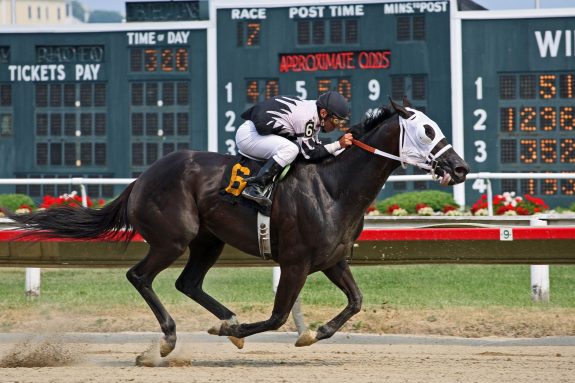
A value bet appears when the odds on offer imply a lower chance of winning…

Oddsmakers usually begin with team or player power ratings, then adjust for the specific matchup.…
